
Overview
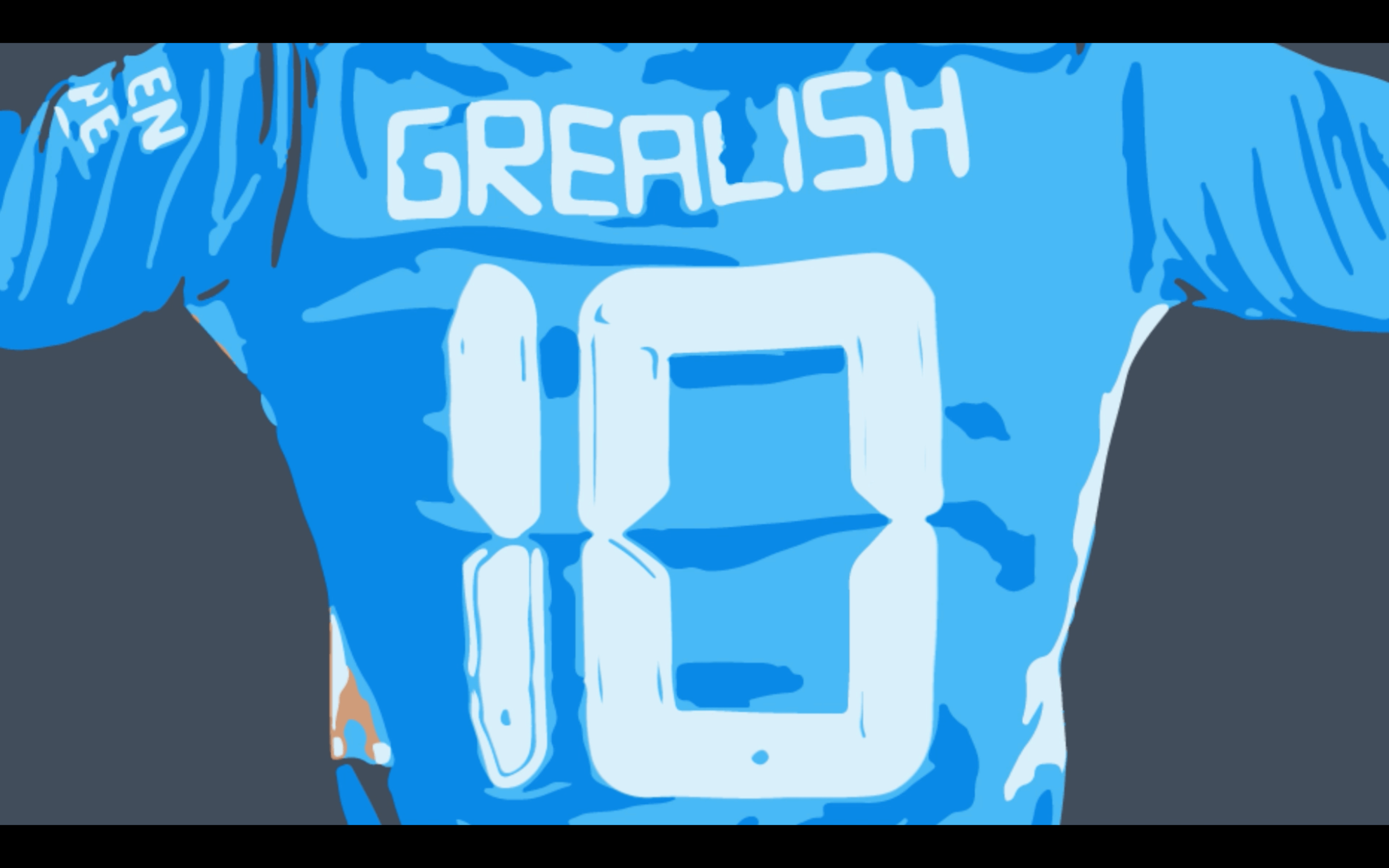
For my university module Digital Design, I created a motion graphic celebrating footballer Jack Grealish and his career so far.
The brief required producing a 90-second digital storytelling sequence using Adobe After Effects, exploring narrative through motion.
This project combined my interests in sport and design, pushing me to create a visually engaging video that blended footage, typography, and animation to tell the story of Grealish’s career journey.
The Challenge
The goal was to design a cohesive motion sequence that showcased key moments from Jack Grealish’s career using strong pacing, rhythmic editing, and smooth transitions.
My main objectives were to:
- Develop storytelling through typography, transitions, and sound.
- Build my After Effects skills (masking, trim paths, motion tracking, and compositing).
- Sync animation to music for impact.
- Create a clear visual style and tone fitting Grealish’s energy and personality.
Design & Development Process
1. Planning & Storyboarding
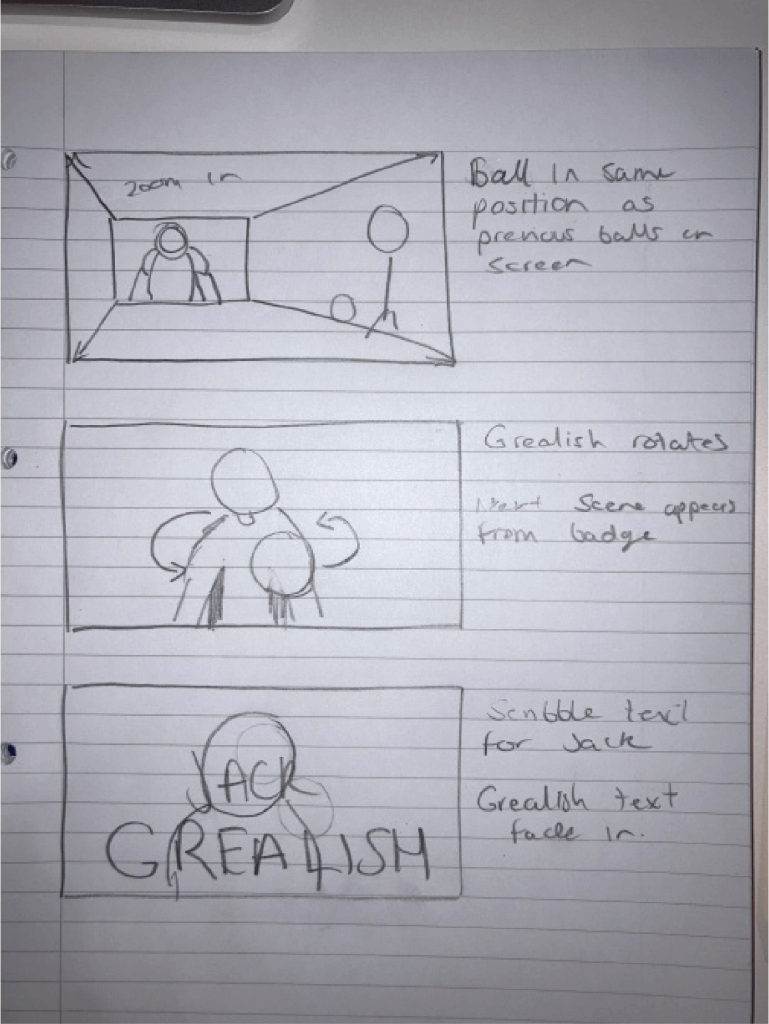
I began by sketching out a storyboard to structure the video’s flow — including key scenes, transitions, and on-screen text.
This helped identify which assets I needed to create and gather, saving time later when compositing.

2. Asset Building
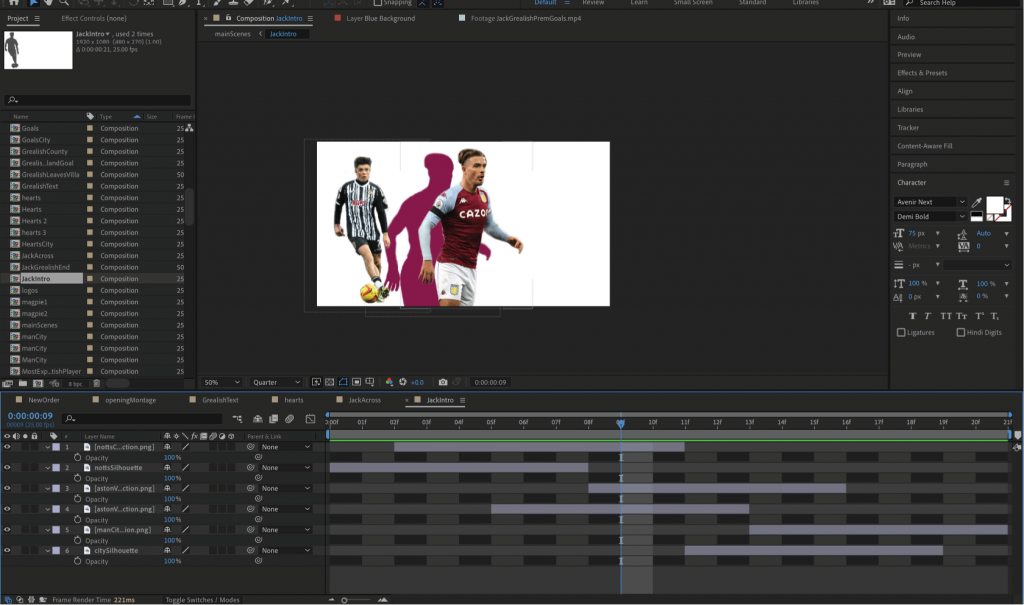
I prepared visual assets in Photoshop and Illustrator, including cut-outs of Grealish and team logos.
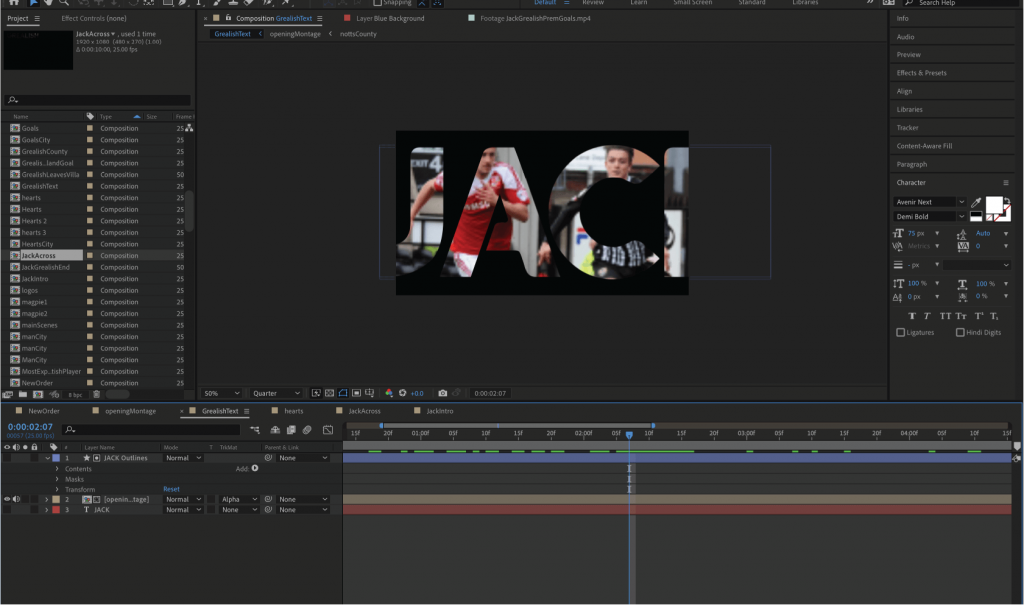
Initially, I experimented with masking footage to reveal text in rhythm with the beat, but later restructured the opening to create a smoother montage sequence.
Finding the right soundtrack was essential to match the tone. I chose “Changes” by Overpass, a Birmingham-based band (Grealish’s hometown), to set a powerful, local tone.
I synced transitions and animations to the beat to maintain momentum.
3. Refining the Opening
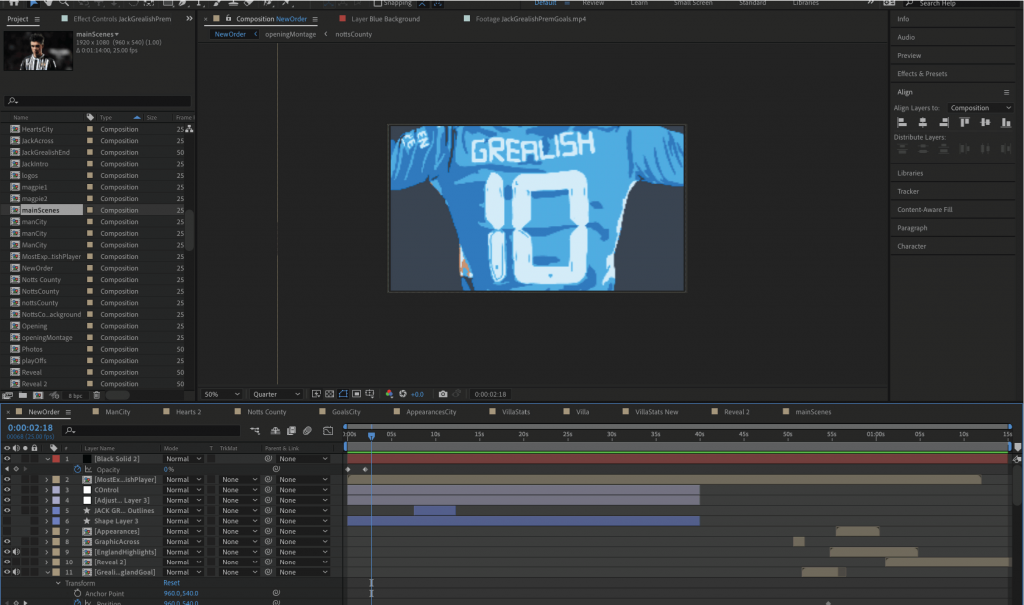
After early feedback, I replaced my initial photo montage with a graphic built from Grealish’s shirt number.
The number “10” then transitioned into his £100 million transfer fee — an engaging, symbolic opening that established tone and visual energy.
I re-storyboarded the sequence to reflect this new concept, which allowed me to introduce narrative meaning through design — connecting his identity to his success visually.
4. Animating Key Scenes
Each section of the video corresponded to a major chapter in Grealish’s career.
- Club Statistics: Overlays and blur effects highlighted career data from Aston Villa, Notts County, and Manchester City.
- Three-Badge Transition: I merged three club badges into the England crest, symbolising his progression from club football to representing his country.
- England Montage: I used masking and careful camera focus to keep the football as the viewer’s visual anchor through multiple shots — a key storytelling device that guided attention naturally.

5. Advanced Motion & Effects
Midway through production, I began implementing more advanced After Effects techniques:
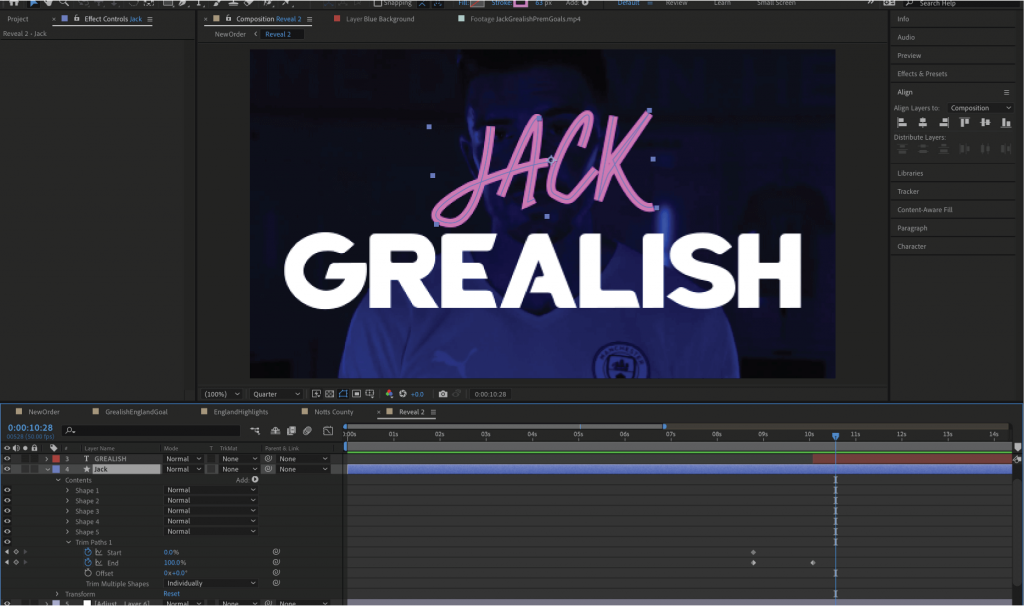
- Trim Paths to animate line drawings and text reveals.
- Tracking Data to attach Illustrator graphics (like fireballs and explosion effects) to moving football footage.
- Mask Transitions to move seamlessly between shots, such as footage emerging through text or badge shapes.
One example involved using a fireball graphic to track the ball’s movement, ending in an explosion synced to a goal — adding cinematic energy.
Another used floating blue hearts transitioning to Manchester City statistics, matching tone and colour branding.
6. Final Sequence
The video concludes with Grealish’s Manchester City reveal, slowed for dramatic effect.
A masked transition from his shirt badge leads into a final shot of Grealish looking upward as his signature (“Jack”) is animated using trim paths — closing the video on a personal, emotional note.
Outcomes
The finished motion graphic combines:
- Dynamic visual storytelling aligned with sound and rhythm.
- Seamless transitions, animated typography, and symbolism.
- A clear narrative flow from early career to England debut.
Watch the final version
Reflection & Next Steps
This project allowed me to push my technical and creative capabilities in After Effects.
I developed strong skills in:
- Masking and compositing for clean transitions.
- Tracking and linking Illustrator assets.
- Trim paths and timing animations with audio.
If I were to revisit the project, I would:
- Spend more time on storyboarding and pacing to refine narrative flow.
- Add more motion-graphics elements to the statistics sections for extra depth.
- Experiment with colour grading and lighting overlays to unify footage.
Overall, this project strengthened my ability to combine motion design, narrative, and rhythm — transforming real-world footage into a cohesive digital story.
This case study demonstrates how I can design, animate, and edit to create impactful visual storytelling through motion graphics.